From Design to Delivery: Where Display Projects Go Wrong
Launching a beauty brand is hard enough without wrestling with fixture logistics. A retail display for beauty brands solution that covers design, sampling, production, and delivery lets founders focus on products instead of plywood. The right display partner becomes an extension of your team — understanding your brand story and translating it into fixtures that sell.
Rolling out displays across a retail chain means balancing consistency with store-level reality. A chain store display solution standardizes branding and shopper experience while allowing modules to adapt to different footprints. Multi-store rollout programs with centralized production and staged delivery keep every location on schedule — and every shelf on brand.
Supermarket beauty sections are where impulse purchases go to die. Fluorescent lighting, cramped shelves, and zero merchandising logic make even great products look forgettable. A supermarket beauty display designed for grocery environments changes that. Endcap-ready formats, personal care grouping, and durable fixtures that survive high-traffic aisles turn a neglected category into a profit driver.
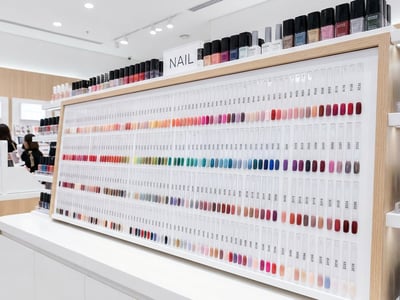
The cash wrap is the highest-traffic zone in any beauty store, yet most brands waste it on clutter. A well-designed cosmetic POS display turns the checkout moment into a final conversion opportunity. Mini organizers, impulse-sized product slots, and clean counter displays catch the shopper's eye during the wait.
Every fixture in your store is either selling your brand or undermining it. Generic shelving, cramped counters, and poorly lit displays quietly cost you sales every single day — and most brands never notice. A modular cosmetics display system standardizes the shopper experience while adapting to different store footprints. Gondola-compatible modules, consistent branding, and scalable components mean your chain rollout happens faster, cheaper, and more consistently.
Big brands get custom fixtures. Emerging brands get stuck with generic racks — or so the story goes. But a custom display manufacturer with low MOQ capabilities and in-house sampling changes that equation. You don't need to order thousands of units to get a display that matches your brand. Sampling, prototyping, and small-batch production let growing brands compete on shelf presence without betting the company.
Approving a display based on a 2D sketch is a gamble. Colors look different, proportions shift, and what looked elegant on paper can look awkward in acrylic. A display design service with 3D rendering lets you see exactly what you're getting before a single unit is produced. Engineering reviews catch structural issues early.
Shoppers may not consciously notice that your display's accent color is Pantone 186 C instead of a generic red — but they feel it. A branded beauty display with precise color matching, logo etching, and custom fixture design signals that your brand cares about details. That perception transfers to the products themselves.
A display that arrives scratched, warped, or missing hardware costs you far more than the unit price — it costs you launch delays, store complaints, and brand credibility. A display quality control process with four-stage inspection catches problems before shipment. Pre-shipment inspection, packaging checks, and logistics coordination mean your displays arrive ready to install, not ready for a repair queue.


Comments
Post a Comment